
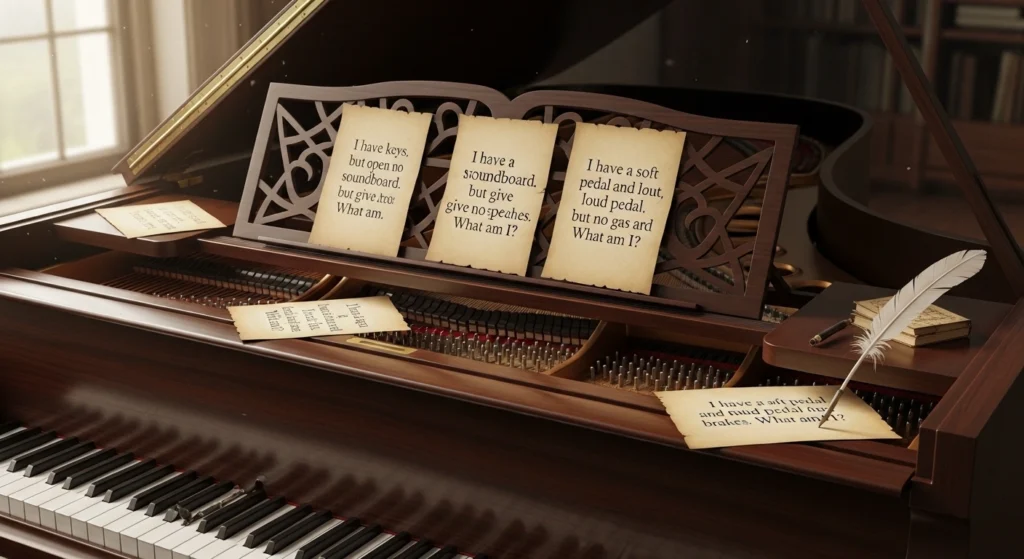
Piano riddles are a delightful mix of music and mystery, designed to challenge both your brain and your love for melodies. These riddles revolve around piano keys, musical terms, and instruments, making them perfect for musicians, students, and curious minds alike. Whether you’re learning piano or simply enjoy music-themed puzzles, these riddles offer a fun way to test your knowledge and creativity.
Beyond entertainment, piano riddles help enhance your understanding of musical concepts in a playful way. They encourage you to think about sound, rhythm, and instruments from a different perspective. Ideal for classrooms, music lessons, or casual fun, these riddles can spark curiosity and laughter. Get ready to tickle your brain just like piano keys with this engaging collection of musical riddles.
Table of Contents
Toggle💡 Did You Know?
Playing piano activates both hemispheres of the brain, improving memory, spatial reasoning, and emotional intelligence.
Piano riddles have been used in classrooms and music schools to teach rhythm, notes, and theory in an engaging, playful way.
🎯 Riddle of the Day
I have black and white, but I’m not a zebra,
I play your favorite tunes when fingers dance over me.
Can you guess the answer? Comment below!
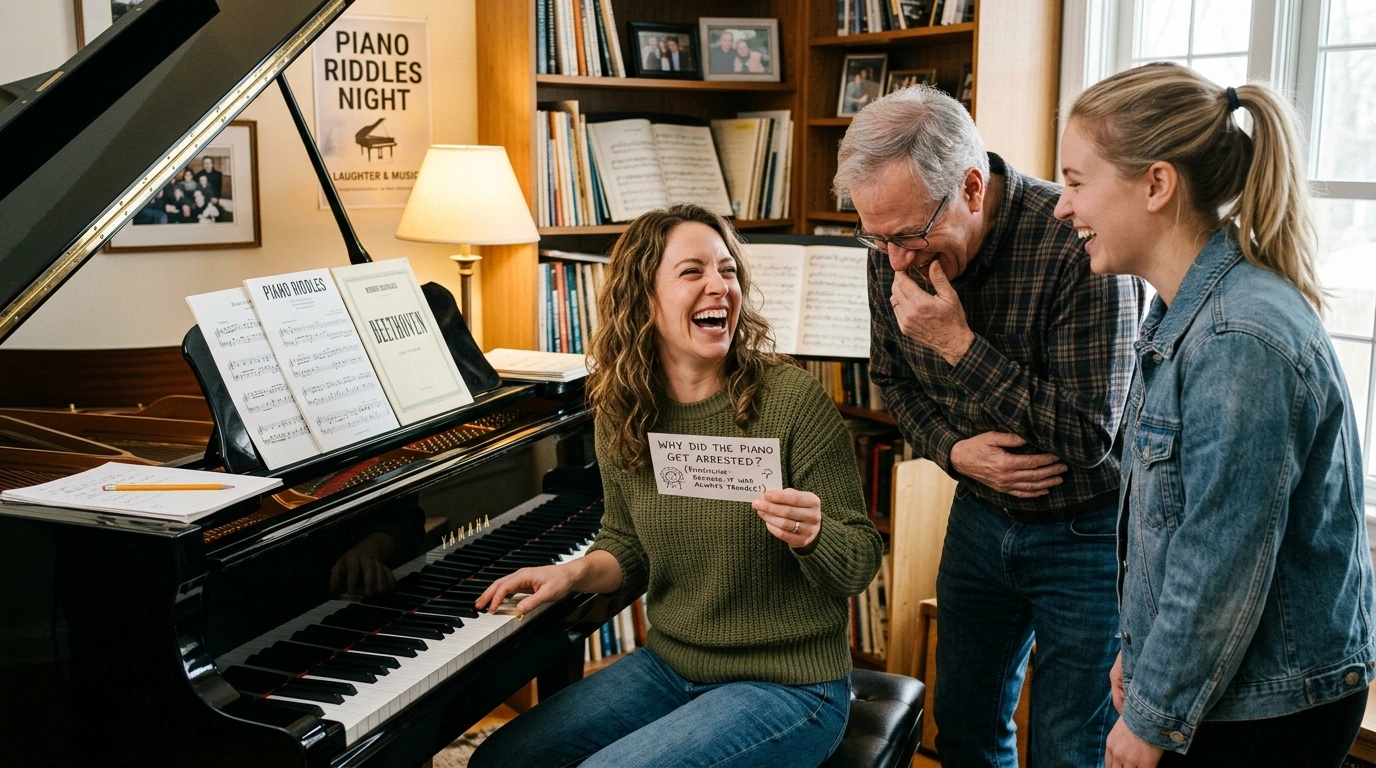
🎹 Piano Riddles with Answers
- I have keys but no locks, I make music but don’t talk. What am I? Answer: A piano
- Black and white I stand in line, press me right and I sound divine. What am I? Answer: Piano keys
- I sing when touched but have no throat. What am I? Answer: A piano
- I can be grand or upright, filling rooms with delight. What am I? Answer: A piano
- My voice comes from strings you cannot see. What am I? Answer: A piano
- I rest in silence until your fingers dance. What am I? Answer: A piano
- I turn simple notes into melodies sweet. What am I? Answer: A piano
- I have pedals that don’t take you far. What am I? Answer: A piano
- I am both furniture and instrument combined. What am I? Answer: A piano
- I create harmony from just a touch. What am I? Answer: A piano
🎼 Piano Riddles for Adults
- I translate emotion into sound without speaking a word. What am I? Answer: A piano
- I require both logic and feeling to truly master me. What am I? Answer: A piano
- My complexity lies beneath a simple set of keys. What am I? Answer: A piano
- I can whisper softly or roar with power. What am I? Answer: A piano
- I demand discipline yet reward creativity. What am I? Answer: A piano
- I am a storyteller without a voice. What am I? Answer: A piano
- I connect mind, heart, and hands in harmony. What am I? Answer: A piano
- My notes can express joy, sorrow, or peace. What am I? Answer: A piano
- I am timeless, yet always modern. What am I? Answer: A piano
- I turn silence into art. What am I? Answer: A piano
🧩 Piano Clues for Scavenger Hunt
- Look for something with keys that doesn’t open doors. Answer: Piano
- Find the place where music begins with black and white. Answer: Piano
- Seek the instrument that sings when fingers press. Answer: Piano
- Go where melodies are made without words. Answer: Piano
- Find the object with pedals but no wheels. Answer: Piano
- Look for the wooden giant with hidden strings. Answer: Piano
- Search for the spot where fingers dance and notes appear. Answer: Piano
- Find the instrument often found in living rooms and halls. Answer: Piano
- Look for the musical box with many keys. Answer: Piano
- Seek the place where harmony lives in black and white. Answer: Piano
🎶 Easy Piano Riddles
- I make music when you press my keys. What am I? Answer: A piano
- I have black and white keys. What am I? Answer: A piano
- I am big and play songs. What am I? Answer: A piano
- You play me with your hands, not your feet. What am I? Answer: A piano
- I sit in homes and make lovely sounds. What am I? Answer: A piano
- I help you learn songs and tunes. What am I? Answer: A piano
- I am loud or soft depending on touch. What am I? Answer: A piano
- I am fun to play and hear. What am I? Answer: A piano
- I have strings inside but you don’t see them. What am I? Answer: A piano
- I am a musical instrument with keys. What am I? Answer: A piano
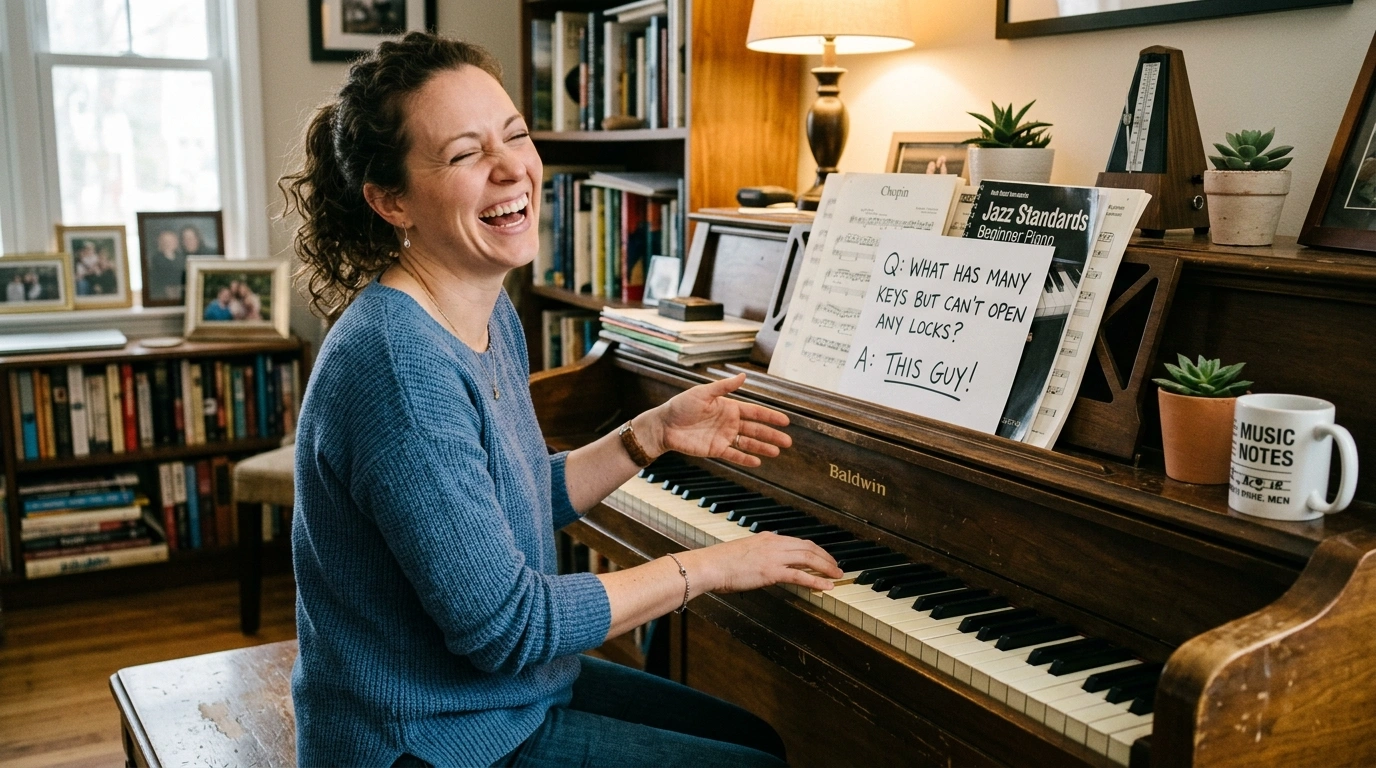
🔐 Cryptic Clue for Piano
- Key player without a lock system. What am I? Answer: Piano
- Grand performer with many keys. What am I? Answer: Piano
- Sound maker with ivory clues. What am I? Answer: Piano
- Musical box hiding strings inside. What am I? Answer: Piano
- Silent until struck by gentle hands. What am I? Answer: Piano
- Black and white puzzle of sound. What am I? Answer: Piano
- Instrument where keys unlock melodies. What am I? Answer: Piano
- A board of notes beneath your fingers. What am I? Answer: Piano
- Harmony hidden in a wooden case. What am I? Answer: Piano
- A riddle of rhythm and resonance. What am I? Answer: Piano
🧠 Hard Riddles
- I have keys that open no locks, space that holds no room, and you can enter, but you can’t go outside. What am I? Answer: A keyboard
- The more you take, the more you leave behind. What am I? Answer: Footsteps
- I speak without a mouth and hear without ears. What am I? Answer: An echo
- I have cities but no houses, rivers but no water. What am I? Answer: A map
- I come once in a minute, twice in a moment, but never in a thousand years. What am I? Answer: The letter M
- I shrink smaller every time I take a bath. What am I? Answer: Soap
- I can fly without wings and cry without eyes. What am I? Answer: A cloud
- The more you use me, the sharper I get. What am I? Answer: Your brain
- I have one eye but cannot see. What am I? Answer: A needle
- What disappears as soon as you say its name? Answer: Silence
🎵 Piano Keys & Notes
I am pressed to make music sing 👉 Piano key
I can be black or white on the board 👉 Piano key
I play high notes and melodies 👉 Treble key
I play low notes with deep resonance 👉 Bass key
I repeat in octaves across the board 👉 Octave key
I vibrate strings when struck 👉 Piano hammer
I make music soft or loud 👉 Dynamics key
I help pianists know which note to play 👉 Sheet music
I create harmony with neighboring keys 👉 Chord key
I bring songs to life under skilled fingers 👉 Piano key
🎹 Piano Playing & Technique
I require practice to master smoothly 👉 Piano technique
I use fingers, thumbs, and sometimes wrists 👉 Finger movement
I can play scales, arpeggios, or chords 👉 Scale exercise
I balance speed and precision 👉 Piano practice
I flow with rhythm and timing 👉 Tempo
I bring expression and emotion to music 👉 Musical phrasing
I include legato and staccato styles 👉 Piano articulation
I help pianists perform concerts confidently 👉 Performance skill
I require patience and focus 👉 Piano lesson
I make quiet sounds or thunderous tones 👉 Touch control
🎼 Musical Terms & Theory
I show how fast or slow to play 👉 Tempo
I indicate loud and soft dynamics 👉 Musical markings
I group notes in rhythm patterns 👉 Measure
I tell the story of the music 👉 Melody
I create harmony behind the tune 👉 Chord
I tell you when to pause or hold 👉 Rest symbol
I guide pianists through key changes 👉 Key signature
I repeat themes for effect 👉 Motif
I mark the beginning and end of a section 👉 Repeat sign
I make music understandable and playable 👉 Sheet music
🎹 Piano Types & Instruments
I have strings and hammers inside 👉 Grand piano
I am portable and often electronic 👉 Keyboard
I have upright strings for home use 👉 Upright piano
I play jazz, classical, or pop effortlessly 👉 Concert piano
I am used for practice in schools 👉 Digital piano
I can be vintage, antique, or modern 👉 Classic piano
I amplify sound electronically 👉 Electric piano
I have pedals for sustain and soft sounds 👉 Pedal piano
I inspire composers and performers 👉 Famous piano
I create symphonies with a single player 👉 Solo piano
🥁 Fun Piano Brain Teasers
I have black and white stripes but make music 👉 Piano
I can sing, dance, and whisper softly 👉 Musical piano
I require fingers to bring me to life 👉 Piano keys
I have pedals to hold notes longer 👉 Sustain pedal
I follow sheet music to play songs 👉 Reading notes
I make concert halls echo with sound 👉 Piano performance
I can play classical, jazz, or pop 👉 Piano genre
I hide surprises in melody and rhythm 👉 Musical riddle
I challenge memory, speed, and creativity 👉 Piano puzzle
I turn practice into beautiful music 👉 Piano mastery
❓ FAQs
What are piano riddles?
Piano riddles are clever, playful brain teasers about piano keys, instruments, music theory, and playing techniques.
Are piano riddles suitable for kids?
Yes! They are fun, family-friendly, and can help children learn music basics while exercising their brains.
How can piano riddles help learning?
They improve observation, reasoning, memory, and musical knowledge while keeping practice playful and engaging.
Can piano riddles be used in music classes?
Absolutely! Teachers can use them for brain breaks, quizzes, or interactive lessons to make piano theory fun.
Where can I find more piano riddles?
You can explore music blogs, educational websites, piano tutorials, or puzzle books for more music-themed riddles.
🌟 Conclusion
Piano riddles are a symphony of curiosity, fun, and brain exercise. From pressing black and white keys to mastering melodies and rhythms, each riddle inspires observation, imagination, and clever thinking. They turn piano practice and musical exploration into playful, poetic adventures.
Share these riddles with friends, family, or music students to spark laughter, learning, and musical creativity. Every answer is a small triumph, and every guess adds a note of joy. Keep your fingers nimble, your mind curious, and let music guide your playful thinking—because every piano riddle is a tiny masterpiece waiting to be solved.